Nature
Maui Whale Season: When the Humpbacks Arrive and How to See Them
Whale season in Maui runs through the northern winter. The Hawaiian Islands Humpback Whale National Marine Sanctuary, run by NOAA, says humpback whales are generally seen in Hawaii from November through April, with the peak from January through March. In those months thousands of whales gather in the warm, shallow channels between the islands to mate, give birth and raise their calves, and the sanctuary counts whale watching among the most popular attractions in its waters.
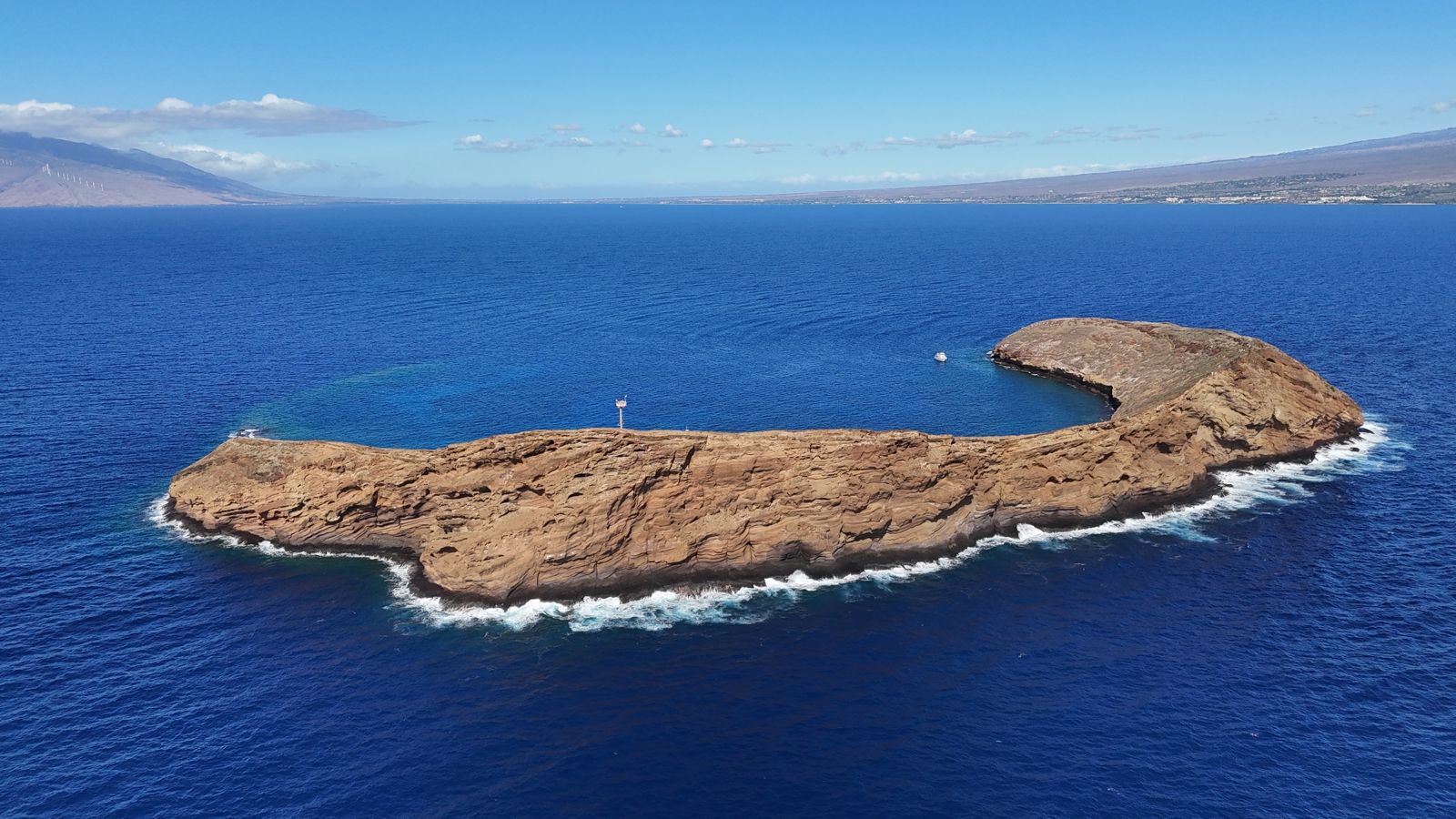
You do not need a dedicated whale cruise to see them. In season, humpbacks breach within sight of the beaches, surface beside snorkel boats crossing to Molokini, and occasionally swim into the crater’s cove. This article explains when they come and why, what they are doing while they are here, the federal 100-yard rule, and the ways to see them from a boat or from shore.
When is whale season in Maui?
The sanctuary’s own wording is the safest guide: from November through April, visitors can see whales from shore and at sea. The best odds fall in the middle of that window.
- November and December: the first whales arrive and numbers build.
- January to March: the peak. Sightings are most frequent, mothers with young calves are common, and competition among males is at its height.
- April: numbers fall as the whales start the long swim north.
- May to October: humpbacks are generally gone; by summer the sanctuary describes most of them making their way back to their northern feeding grounds.
Boat operators set their own whale-watch calendars inside that window, and the dates differ. One Ma’alaea catamaran runs its two-hour whale watch from November 24 through April 30 and tells its Molokini snorkelers to watch for humpbacks from December through April. Another Ma’alaea operator runs seasonal whale watching from December 16 to March 31, and a sailing operator lists whale watching from December to April. If whales are the main point of your trip, book between January and March.
Why the whales come to Maui
Hawaii is a nursery, not a feeding ground. The sanctuary calls the Hawaiian Islands the principal winter breeding grounds of the North Pacific humpback population, and says each winter and spring approximately half of the North Pacific’s humpbacks visit Hawaiian waters. Here they compete for mates, mate, give birth and nurse their newborn calves.
The whales favor relatively shallow water, less than about 600 feet deep, close to the islands. That describes the Maui Nui region almost perfectly: the shallow channels between Maui, Lanai, Molokai and Kahoolawe, which in the Pleistocene formed a single prehistoric island. It is why the channels off West and South Maui are so good for whale watching, and why the sanctuary’s protected area wraps around Maui’s coast. Molokini Crater itself lies within the sanctuary.
The longest commute
The whales you see off Maui spent the summer far to the north. NOAA Fisheries says the Hawaii population feeds across the North Pacific, including the Gulf of Alaska, Southeast Alaska and northern British Columbia, and that some humpbacks migrate from Alaska to Hawaii, a 3,000-mile trip they can complete in as few as 28 days. Some humpback populations elsewhere swim 5,000 miles between feeding and breeding grounds, one of the longest migrations of any mammal.
The summer is for eating. In the warmer months humpbacks spend most of their time feeding on krill and small fish, straining them through baleen plates, and building up fat stores to last them through the winter. Hawaii’s warm water has little of that food, which makes the winter here a long fast.
Meet the humpback
The numbers explain why a breach from a boat is so startling:
- Length: up to about 60 feet.
- Weight: up to about 40 tons.
- Lifespan: about 80 to 90 years.
- Flukes: up to 18 feet wide, with patterns so individual that researchers use them like fingerprints to identify whales.
- Name: the long pectoral fins inspired the scientific name Megaptera, “big-winged.”
In Hawaiian the humpback is kohola, and the sanctuary notes that the whales are an important part of Hawaiian history, legends and connection to the sea.
What the whales do in Hawaiian water
Most of what you will see on a whale watch is surface behavior, and NOAA describes humpbacks as a favorite of whale watchers because they are so often active. Things to watch for:
- Breaching: the whole whale launches out of the water and crashes back.
- Fin and tail slaps: a whale on its side or back slaps the surface with a pectoral fin or its tail, sometimes over and over.
- Blows: the spout of a surfacing whale, often the first thing you notice from shore.
- Mother and calf: a small calf staying close beside a much larger whale.
- Competitive groups: several males chasing a female, the most energetic sight of the season.
Calves in the channel
Hawaii is where many humpbacks are born. NOAA says calves arrive after an 11-month gestation and measure about 13 to 16 feet at birth. Females produce a single calf every 2 to 3 years on average, and calves stay near their mothers for up to 1 year before weaning. Humpbacks reach maturity between 4 and 10 years old.
That is why January to March feels so busy: mothers with newborns, males competing for females and juveniles all share the same shallow water. It is also why the approach rules below exist. A calf needs to rest and nurse, and a mother between a boat and her calf is a stressed whale.
From whaling to recovery
Humpbacks are a comeback story. Before the international moratorium on commercial whaling in 1985, most humpback populations had been reduced by more than 95 percent. The United States listed humpbacks as endangered in 1970, and again under the Endangered Species Act in 1973.
Numbers have grown in much of the world since then, and the sanctuary says humpback numbers in Hawaii have generally rebounded. NOAA notes that 4 of the 14 humpback population segments are still listed as endangered and one as threatened; the Hawaii population is not among them, though in Hawaii humpbacks remain protected under the Marine Mammal Protection Act, state law and the National Marine Sanctuaries Act, and the 100-yard rule still applies.
The threats have changed rather than vanished. NOAA lists entanglement in fishing gear and marine debris, vessel strikes, noise and vessel-based harassment. The sanctuary’s response network reported that the 2024-2025 season was its 23rd and busiest: 32 confirmed reports representing 16 entangled whales.
Watching the whales, scientifically
The sanctuary does more than enforce distances. Its scientists study population trends, migration patterns and environmental pressures, from marine heatwaves to shifting food supply, to understand how the ocean is changing for these whales. Some of the tools are new: before the whales arrive, the team practices tagging humpbacks from drones, and a 2025 sanctuary study used suction-cup tags to compare movement and sound production in yearling whales with older ones.
The entanglement work has its own success stories. A young humpback found entangled off Maui in 2017 seemed unlikely to survive; responders freed it, and it was seen again, healthy, seven years later. Every breach you watch from a boat is, in a small way, part of a population that people have spent decades helping back.
The 100-yard rule
Federal law sets the distance, and it applies to everyone on the water. NOAA Fisheries says federal law prohibits approaching within 100 yards (91 meters) of humpback whales in Hawaii, whether by boat, kayak, drone, swimming or any other means. The sanctuary repeats it on every page: always keep a safe and legal distance of 100 yards.
What it means in practice:
- On a tour boat, the captain keeps the distance. If a whale chooses to approach a stopped boat, that is the whale’s choice, and boats wait for it to move off.
- On a kayak or paddleboard, you are a vessel too. Stay 100 yards off and never paddle toward a whale.
- Snorkeling, never swim toward a whale. Whales sometimes pass close to a snorkel stop; stay with the group and let them go by.
- Drones count. The 100-yard limit applies to flying one toward a whale as well.
Dolphins have their own rule: federal law prohibits swimming with, approaching or remaining within 50 yards of spinner dolphins in Hawaii. NOAA also notes that vessels can cause humpbacks stress and behavioral changes, which is the reason behind both limits.
Other animals you may meet in season
Humpbacks get the attention, but they share the channels with plenty else. The sanctuary counts 23 other cetacean species observed in Hawaiian waters, including spinner, spotted and bottlenose dolphins and the false killer whale. NOAA notes that spinner dolphins rest and nurture their young during the day, which is why the 50-yard rule applies whether you see them from a boat or a paddleboard, and why swimming with them is off limits.
Hawaiian monk seals are becoming increasingly common in sanctuary waters, and NOAA asks people to stay at least 50 feet from them, and at least 150 feet from a mother with a pup. Green sea turtles are everywhere along the South Maui coast; the recommended distance is 10 feet. Our Turtle Town article covers them in detail.
Seeing whales from a boat
There are three main ways to get on the water in season:
- Dedicated whale watches. Short trips, often around two hours, on Ma’alaea catamarans, plus quick raft trips from Kihei; one Kihei raft operator runs a 1.5-hour whale watch and a 2.5-hour whale watch with a Molokini snorkel.
- Snorkel trips with whales on the way. Molokini and Turtle Town trips cross the same channel, and in season captains stop when whales surface. The crossing to the crater is short, so this is a simple way to combine both.
- Sailing trips. Quieter under sail, and some sailing operators fold whale watching into their Molokini trips from December to April.
Whales are wild and no boat can promise a breach. Calm mornings make blows easier to spot, and afternoon trade winds can whip up whitecaps that hide them. Our guide to Molokini snorkel tours explains which departures run in whale season.
Whales at Molokini
Snorkelers at Molokini sometimes get the season’s best surprise. DAR, which manages the crater’s marine life conservation district, notes that humpback whales have been known to enter the cove. If it happens, the rules do not change: stay with your boat’s group, keep your distance and let the whale pass.
For more on the crater itself, see our guide to snorkeling Molokini Crater and our Turtle Town article for the coast just east of it.
Watching from shore
You do not need a boat at all. The sanctuary says that in season visitors can see whales from shore as well as at sea, and the long-running Sanctuary Ocean Count shows how well that works. Launched in 1996, it sends volunteers to count whales from shore during the winter months.
The 2025 counts give a sense of scale: 1,353 volunteers counted from 44 sites across Hawaii Island, Maui, Molokai, Lanai, Oahu and Kauai, and recorded 4,782 humpback sightings over the three days of the event. The sanctuary is careful to say that the total may include the same whale seen more than once.
Tips for shore watching:
- Go high. A lookout or cliff top gives a much wider view of the channel than the beach.
- Bring binoculars and scan for blows, then watch that spot.
- Pick a calm morning. Whitecaps make blows hard to see.
- Be patient. A whale that dives can stay under for a long time before the next blow.
The sanctuary on Maui
The sanctuary keeps a facility in Kihei, on South Kihei Road, and holds free monthly talks at its lecture hall at 726 S. Kihei Rd., open to the public. In front of the property is Ko’ie’ie, a three-acre traditional fishpond that the sanctuary calls one of the last intact fishponds on the South Maui coast. For anyone heading out on the water, the sanctuary also offers a free online whale-watching course on safe and respectful viewing.
Whales, people and the land
The sanctuary frames its work in Hawaiian terms. Native Hawaiians managed natural resources in ahupua’a, land divisions that run from the mountains to the sea, on the understanding that what happens on land (mauka) affects the ocean (makai). The sanctuary follows the same idea, treating the kohola as ambassadors for looking after the whole system: runoff, fishing gear, boat traffic and noise all end up in the whales’ winter home.
For visitors that translates into a few simple habits during whale season: keep the 100-yard distance, choose operators who respect it, bring home any line or plastic you find on the beach, and use mineral sunscreen in the water.
Planning a whale-season trip
A few practical points if you are timing a Maui visit around the whales:
- Aim for January to March if whales are the priority; November, December and April are good but less certain.
- Book mornings. Calmer water makes blows and breaches easier to see, and trade winds usually rise later in the day.
- Combine trips. A Molokini snorkel in whale season often doubles as a whale watch, so you may not need a separate cruise.
- Bring layers. Winter mornings on the open channel feel cool after a swim, even in Hawaii.
- Expect weather changes. Winter can bring bigger surf and wind, and captains change routes or cancel when the channel is rough.
If you see a whale in trouble
Do not approach an entangled or injured whale yourself; the gear can be dangerous and the whale unpredictable. Call the NOAA Marine Wildlife Hotline at (888) 256-9840, or hail the U.S. Coast Guard on VHF channel 16, and tell your captain. Trained teams handle disentanglement.
Frequently asked questions
When is whale season in Maui?
Humpbacks are generally seen in Hawaii from November through April, with the peak from January through March, according to the Hawaiian Islands Humpback Whale National Marine Sanctuary.
What is the best month to see whales in Maui?
Any month from January to March. That is the peak of the season, when the most whales are in Maui’s channels and mothers with young calves are common.
How close can you get to a humpback whale in Hawaii?
No closer than 100 yards (91 meters). Federal law prohibits approaching humpbacks in Hawaii within that distance by boat, kayak, drone, swimming or any other means.
Can you see whales on a Molokini snorkel trip?
Often, in season. Snorkel boats cross the same channel the whales use, and captains stop when whales surface nearby. Humpbacks have even been seen entering Molokini’s cove.
Why do humpback whales come to Maui?
To breed and give birth. Hawaii is the principal winter breeding ground for the North Pacific population; the whales feed in Alaska and nearby waters in summer and fast through the winter here.
Can you see whales from shore in Maui?
Yes. The sanctuary says visitors can see whales from shore as well as at sea between November and April, and its volunteer Ocean Count is done entirely from shore sites. A high lookout, binoculars and a calm morning give the best chance.
Are humpback whales still endangered?
Not all of them. NOAA lists 4 of the 14 humpback population segments as endangered and one as threatened; the Hawaii population is not among them. All humpbacks remain protected under the Marine Mammal Protection Act, and the 100-yard rule applies in Hawaii.